
Join SH//FT founder Brian Mackenzie in the first episode of The Disruptors – conversations with those disrupting the norm.
Brian Mackenzie on Going Beyond Information for Deeper Understandings
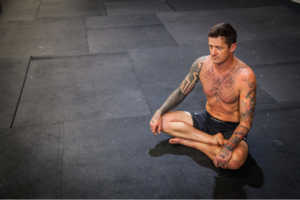
When I originally got into human performance, I was young. Very young.
I liked going fast at the age of 4, and although it was in a swimming pool, it transcended very quickly into skateboards and BMX bikes. These things manifested into skiing, snowboarding, surfing, and continued with swimming into my late teens and early 20s. I took these fascinations through many twists and turns until it finally landing into a career in my late 20s with coaching. I got good at coaching roughly 4–5 years into the process… right about the time Facebook started; 2004.
Needed Alternative Ways to Train
That same year I did Ironman Canada, preceded by Ironman California (a half Ironman) and began looking at alternative ways to train for endurance events. My backgrounds in swimming and cycling made my “runs” look abysmal. Meaning I did pretty well on the swim and bike sides, but not so great on the running side. So, I started looking into the extremes of running. I read several articles (although there were very few at the time) on men and women running through the mountains in what were called ultra endurance runs.
Fascinated with concepts, principles, and with a decent understanding of physiology along with mechanics, I began toying with the idea of mechanically efficient running, intensity, and recovery. In 2005, I opened my first gym and it became the laboratory for all of this. Between the strength and conditioning equipment, treadmills and bike ergometers, we had the use of mini-saunas for heat exposure, altitude machines for low O2 training, climbing walls, and a slew of clients, and coaches who were willing to see how far we could take this idea.
My Process of Training Development
I spent the first 4-yrs of my career doing things one way, then another 6-yrs by going to the beginning and looking at something in an entirely unique way. So we climbed that mountain and as this internet and social media thing grew we were able to share more and more with others on the ideas. Many people are to thank for that process, including mentors, friends, partners, clients, coaches, and a community of people who embraced the theories we were putting out. 10-yrs of learning, which had come after a decent amount of book learning, and almost 30-yrs of wanting to go fast.
In the time since this paradigm shift, we’ve collectively been looking at more and more developmental theories and ideas that were typically done one particular way or were a byproduct of something else occurring. If you’ve followed our work you know that breathing is at the tip of this spear head. That in and of itself is not the only thing we have been “tweaking” or looking at differently. And although you may believe jumping in an ice bath or sauna or interval training is some static exercise, you might want to pay a little closer attention to the language and ways we are pushing these things. Tradition is great, and although each of these ideas is grounded in hundreds, if not thousands of years, of customs, doing things one way is about as inhuman as it can get.
Human Evolution is a Factor
When we start to look at history, and how we’ve evolved as a species, there are really only a few points where we see very fast changes. The advent of fire (controlling it), tools (using them), agricultural, and information. Each comes with promise, and each comes with consequence. I’ll let you use your imagination with the first 3 – there may be others as well – but as for the Information Age we have seen the greatest rise in how we can learn. This is what I believe may be our greatest asset as a species. The sharing of information and ability to apply that to ones own experience. This is our concept of N=1.
If we really break things down, information as a stand alone is meaningless. It is noise. Unfortunately, by and large most of us, including me, do not know what to do with that information, nor can we store that information. It has to sit on a hard drive or link in order for us to retrieve for later. So as social beings all operate, we formulate biases to what types of information we like. This is quite subjective, and incredibly problematic for those of us that cease to explore information further, and more importantly apply it to an experience. One can not live in theory without practice, and this is how the Information Age has been eroded at its foundation.
Go Beyond the Information
The unique part about being the human animal is that we also have the ability to observe our own behavior, although I’d argue not enough people are doing this, and more information is providing us with a chemical conditioning that is no different than the tobacco industries way of making smoking cool. The ability to read something quickly online and reproduce that information without application has left us with a growing mental problem that will more than likely continue to have us going to “I’m right dot com” or thinking research and theory are practice. We must not forget either, that any theory devoid of practice is only an idea, and it is up to the naysayer to show the theory does not hold true. This is where the “my opinion counts” crowd needs to be observed. This can be seen in any comments section of anyone spending time bringing down an idea they don’t agree with. We are not entitled to be sitting at the table with those who go to war when we’ve never been to war.
In my 2 decades of experience in an industry, I have been a part of this wave of misinformation, and I’ve played a role in pushing people to understand deep practice. I can find no better vehicle than the idea of going fast. Now, that may not be Usain Bolt, Marion Jones, Lance Armstrong, or Dale Earnhardt, it may mean getting off the couch and walking, or doing some breathing.
Going fast eludes to the idea of learning. My Art of Breath co-founder Rob Wilson conceived an idea that I believe shows exactly where we are at on a scale of adaptability.
Ignorance is < Information is < Knowledge is < Learning.
Interestingly, this shows where bliss can be had. The ignorant shall remain blissful, as will those who employ a learned state. It is in information and knowledge where we get stuck and begin to believe we have the answer. There is no answer, there are tools, and our convenient lives have allowed us to regurgitate anything without trial. This stops all forms of learning. This stops adaptability. This stops our species from progressing.
I train and have developed training programs based on ideas that I challenged. These ideas all look at long term intrinsic human development. I challenged ideas by doing something. Although I’ve run my mouth or my typewriter pretty poorly in the past, for quite some time we have been testing or putting these ideas to practice. I have made it a part of my life to share that information, not with the idea that we are giving anyone knowledge, but that we are pushing you to see how much more we all can learn.
Feature Athlete: Lindsey is Fitter, Faster, Stronger, and Leaner than Ever
In our latest member feature, meet Lindsey from Norco, CA.
SH//FT: What obstacle/s were you facing when you decided to join the SH//FT program?
Lindsey: Neither my husband nor I had done a triathlon, let alone an Ironman. Neither of us were strong swimmers, and I had done two marathons training in the traditional method but thought I was done with distance because my knees have never been the same after training for those two marathons in my early 20s.
SH//FT: How has SH//FT helped you overcome that/those obstacle/s?
Lindsey: I think the most impressive party of Shift Pro is that you can clearly understand the thought behind the methodology. I’ve always been someone that asked why, and why is laid out so expertly that the training just falls into place after that. Just follow the program.
SH//FT: What does SH//FT provide that you value the most?
Lindsey: I love the structure and the focus on skill work as opposed to just miles and miles. My husband is a pilot in the Air Force and I’m a Deputy District Attorney, so we both lead stressful, time-consuming jobs. With the time spent with Shift Pro, you know every minute counts.
SH//FT: What have been your results or the impact on your life from training with SH//FT?
Lindsey: My husband and I completed our first triathlon, the Memorial Hermann Ironman in Texas on April 28, 2018. As a result of training in this manner, I have finally learned how to run correctly and I can now swim Ironman distances! I have maintained a lighter frame from training and quite frankly want to train six days a week when I was averaging 4-5 prior to this training. We just started training for a marathon in Phoenix in February where I’m hoping to qualify for Boston, which I never thought was attainable before this training. I’m fitter, faster, stronger, and leaner at 35 than I was at 25.
SH//FT: Why did you choose to join SH//FT over another program/service?
Lindsey: I loved the methodology. And quite frankly, my knees and my work schedule doesn’t allow for typical endurance run tons of miles training.
SH//FT: What would you tell others who may be considering joining SH//FT?
Lindsey: Just jump in and do it. Read the emails, watch the videos, believe that doing things right is more important than doing them a lot. I really love this program.
Featured Athlete: Linda had Already Run a Marathon
In our latest member feature, meet Linda from Ironton, MO.
SH//FT: What obstacle/s were you facing when you decided to join the SH//FT program?
Linda: Age and a past IT band injury. I think I neglected my strength training out of fear I’d ruin my legs for running.
SH//FT: How has SH//FT helped you overcome that/those obstacle/s?
Linda: Oh my goodness!! The programming made my legs wicked strong!! I liked the variety, though as I told Jason, I HATE interval training. Haha. But there’s no doubt the intervals made me faster.
SH//FT: What does SH//FT provide that you value the most?
Linda: The programming tailored for my particular sport (running). The great communication from the coaches. The science and expertise behind it all. The opportunity for additional consults – for example, I had a fantastic nutrition consult with Lindsay Ford.
SH//FT: What have been your results or the impact on your life from training with SH//FT?
Linda: I went into my second marathon Uninjured and strong. Despite it being 10 degrees hotter than last year, I beat my time by 20 minutes and was strong all the way to the end. AND I felt so much better afterward than the year before!
SH//FT: Why did you choose to join SH//FT over another program/service?
Linda: The range of services, the personal communication, the quality of programming. Also, the demo videos and other additional and valuable content. And who knew about breathing?? Learned so much!
SH//FT: What would you tell others who may be considering joining SH//FT?
Linda: DO IT. You will not be sorry!! And you will surprise yourself!
The Culture and Biology Of Stress and Rest
The inability to manage stress is on the rise. Stress negatively affects everyone: athletes, employees, soldiers, kids etc. So how do we improve our ability to manage stress? First, let’s understand what we mean by talking about the culture and biology of stress and rest.
What Is the Culture and Biology Stress?
Stress is our body’s response to pressure/demand placed upon it. It is a necessary part of life. The body does not differentiate between physical, mental or nutritional stress, its response is the same. The body enters into a physiological state, of differing degrees of stress called the Sympathetic State (Flight or Freeze) that is defined by:
- The release of roughly 30 hormones including cortisol, norepinephrine and epinephrine.
- Increased heart rate, blood pressure, muscle tension.
- Breakdown of fuels for available energy.
- Pupil dilation.
- Vasoconstriction; the constriction of blood vessels.
The Role Of Stress
Being in this Sympathetic (dominant) State plays an important role:
- It helps to keep us alive when we are in danger.
- Stimulates our body to make future adaptations (think about exercise).
- Is like a dial. We can be very stressed, running from a lion, to slightly stressed, crossing the road, and anywhere in between.
We are an adaptive species and adapt to stressful stimuli. Therefore, there are appropriate times to enter into this state. Without appropriately stressing the body we would not start the process of ever getting better at something.
Current Reality
In reality, we spend too much time in a ‘stressed’ state. This becomes chronic. We are not designed to handle this and don’t take the time to recover, before over-doing it again. We know that being in this state for too long in the short to midterm results in fatigue, lack of focus, irritability and difficulty sleeping.
In the long term we know it leads to burn-out, injury, illness and disease. Hence, why we see that stress will most likely be the leading cause of death by 2025. Not because stress is bad, but because we enter this state inappropriately and stay there too long. We have an inability to manage our stress.
What Is Rest?
Rest is the ceasing of pressure/demand placed on the body in order to relax, sleep or recover.
The body enters into a physiological state of rest called the Parasympathetic State (Rest & Digest) that is defined by:
- No involvement from Adrenal Gland.
- Decrease of heart rate, blood pressure, muscle tension.
- Vasodilation; the dilation of blood vessels.
- Pupil Dilation.
- Increase in digestive juices.
The Role Of Rest
Being in this Parasympathetic State plays an important role:
- It’s where the body repairs, digests and reproduces
- It’s where the adaptations, stimulated from the stressed state, can actually occur, E.G. stress of muscle building focused exercise leads to muscle growth once entering into a rest state after the stress.
- It’s where we lose weight, gain muscle, learn new skills and suppress illness.
- Is like a dial, we can be very rested, deep sleep, to slightly rested, going for a walk, and anywhere in between.
It can also have chronic implications as well. We should really think of the state of rest as the state of adaptation.
Current Reality
In reality however, we do not spend enough time in a state of rest. In our culture, we find it very difficult to shift into this state. We don’t allow our bodies to make any adaptations to the stress we give it. We do not recover, grow or develop to our potential. Again, rest is another culturally heavy word. It means different things to different people. Judeo-Christian belief that rest is bad, weak and lazy.
Relationship
It’s not that either is good or bad. They are both important, in appropriate amounts:
Optimal Balance – Adaption
Thriving
Sub-Optimal Balance – Mal-Adaptation
Plateau or Suffering
Manage
Now we understand that we need an optimal balance; how do we manage stress in reality?
We call Stress Management -> State Management
1) We need to be aware of our current state.
2) We need tools to be able to shift state to achieve an optimal balance.
These tools are available in our Skill of Stress Online course. Enter your email to stay up to date on releases.
Conclusion
Managing your state is achievable and pays significant dividends now and in the long run. With this deeper understanding, we can look at the words stress and rest in a new light.
Stress is not bad, it’s necessary. Understanding the culture and biology of stress is the first step in building your optimal stress response. But if we continue to stress ourselves out inappropriately, we do not spend enough time in a rested state and therefore make no adaptations. As our very own Doc Hickey says:
“It’s not how much work can do, it’s how much work you can recover from.”
Featured Athlete: James was Feeling Burned Out with Training
In our latest member feature, meet SH//FT member James from Huntington, NY.
SH//FT: What obstacle/s were you facing when you decided to join the SH//FT program?
James: Uncertainty leaving CompTrain for a new program… overtraining issues, clarifying longevity goals, was getting a bit burned out training.
SH//FT: How has SH//FT helped you overcome that/those obstacle/s?
James: I use the tactical programming, and it has been a welcome change of pace. I have built some strength and new levels of aerobic conditioning.
SH//FT: What does SH//FT provide that you value the most?
James: Diversity of programming. Giving me the programming a week ahead of time allows me to go into the week relaxed and looking forward to what’s coming.
SH//FT: What have been your results or the impact on your life from training with SH//FT?
James: Aerobic base and brute force strength.
SH//FT: Why did you choose to join SH//FT over another program/service?
James: I dug Brian McKenzie’s interviews and I started following the Instagram page. I was really curious about some of the workouts posted from the various programs – a hypoxic workout in particular was a blow me away moment. After getting my ass kicked by simply carrying a kettlebell front racked holding my breath and seconds later gasping for air made me realize there was a lot more to fitness than just WOD’ing to death.
SH//FT: What would you tell others who may be considering joining SH//FT?
James: Especially in the tactical world, I would say here is a program that will give you mixed energy system training, strength and power building, with a taste of some bleeding edge theories on performance.
Featured Athlete: Massimo’s Motivation Was Down
In our latest member feature, meet SH//FT member Massimo from Pesaro, Italy
SH//FT: What obstacle/s were you facing when you decided to join the SH//FT program?
Massimo: Finding the motivation to go out to run and swim instead of just lifting weights at the gym.
SH//FT: How has SH//FT helped you overcome that/those obstacle/s?
Massimo: I make myself add my results to the website comments where the coach can see them, which pushes me to do what I don’t always want to do.
SH//FT: What does SH//FT provide that you value the most?
Massimo: Short workouts that are effective.
SH//FT: What have been your results or the impact on your life from training with SH//FT?
Massimo: I feel good and now enjoy getting outside the gym to train.
SH//FT: Why did you choose to join SH//FT over another program/service?
Massimo: I went to the Art of Breath Clinic this year in Italy and loved it. Plus I know that Shift places skill before everything else.
SH//FT: What would you tell others who may be considering joining SH//FT?
Massimo: Give it a shot. It’s effective and cost-efficient!
Featured Athlete: Abe was a Busy Guy
In our latest member feature, meet SH//FT member Abe from Stuarts Draft, VA
SH//FT: What obstacle/s were you facing when you decided to join the SH//FT?
Abe: I was preparing to participate in Spartan Race’s Agoge in June 8, 2018. It is a 60-hour event involving physical and mental tasks and virtually no sleep. I also participated in Peak Race’s Death Race, another extreme endurance event. The website says, “The Death Race is the ultimate challenge, designed to present you with the unexpected and the completely insane! Nothing else on earth will challenge you like The Death Race, both mentally and physically…”
SH//FT: How has SH//FT helped you overcome that/those obstacle/s?
Abe: The Tactical program helped prepare me for the long physical hikes and carrying weight over long distances. At different times, I was tasked with crawling long distance, carrying logs, and moving boulders. The Tactical program, is an intense program, that prepared me for virtually any challenge given to me during these and other events I participated in leading up to these main events.
SH//FT: What does SH//FT provide that you value the most?
Abe: The most important thing GHP gives you is a program that provides short, intense workouts that are effective and still give you plenty of time to spend with your family and work.
SH//FT: What have been your results or the impact on your life from training with SH//FT?
Abe: Using GHP, I’ve been able to refocus my training and I have the confidence to take on greater challenges. All the while, I still have time to teach high school, coach high school football and wrestling, practice jiu-jitsu 2–3 times a week, AND have time for my wife and son.
SH//FT: Why did you choose to join SH//FT over another program/service?
Abe: GHP provided an inexpensive program that was an answer to my training needs, specifically for long tactical style endurance events.
SH//FT: What would you tell others who may be considering joining SH//FT?
Abe: Do it. It’s worth it. If your commit to the program, you will succeed in whatever goal you have set.
Featured Athlete: Jo Was Unfit, Tired, and Stressed
In our latest member feature, meet GHP member Jo from Cumbria, UK.
SH//FT: What obstacle/s were you facing when you decided to join the GHP program?
Jo: I was exhausted after 2.5-yrs self-building our house; it left me strong but unfit, tired and stressed. But I was eager to get back to swim fitness and needing to exercise to help bring stress levels down. I kept trying my old combinations of CrossFit and swimming, but the intensity was wrecking me. I couldn’t get the recovery right, so I kept loading more stress onto a stressed body and pulling muscles while not getting any faster in the pool.
SH//FT: How has GHP helped you overcome that/those obstacle/s?
Jo: Shift Pro gives me a structured routine I can dip into when time allows, both in the pool and focused strength work outside the pool. Most crucially, it has taught me how to recognize when I’m still recovering or when I’m ready for the next WOD through the breath work. My swim times are improving; I can WOD without exhausting myself by using nasal breathing, and I don’t feel wiped out after it all!
SH//FT: What does GHP provide that you value the most?
Jo: Through nasal breathing it gives me a way to understand what my body is telling me about how tired I am and what it can or cannot tolerate – basically whether to rest up, exercise gently or push my limits!
SH//FT: What have been your results or the impact on your life from training with GHP?
Jo: I’ve smashed my 200 and 400m swim times without wrecking myself! I feel healthier, stronger, fitter and more confident about exercising without asking too much of a tired body.
SH//FT: Why did you choose to join Shift over another program/service?
Jo: I used to follow Brian Mackenzie when he did CrossFit Endurance and that really worked for me, so I knew I loved his methods and theories; no other service offered me a structured program of sport-specific exercise aimed at swimming AND a method of learning about recovery like GHP does.
SH//FT: What would you tell others who may be considering joining Shift?
Jo: Get signed up! Especially if you are time short and need something tailored to your sport rather than more general fitness.
Featured Athlete: Florian Finished an Ironman in Under 11 Hours
In our latest member feature, meet GHP member Florian from London.
SH//FT: What obstacle/s were you facing when you decided to join the GHP program?
Florian: I have a limited amount of time to train given my busy work schedule, and few opportunities to go for long runs or rides as I live in central London. I also suffered from knee arthritis when I was younger and still have pretty bad knees compared to an average person, so training in a smart way, avoiding junk volume and getting stronger/more efficient in my movements were key for me! Most importantly, I wanted to take out the brain work of having to plan my own training and have a program with periods of higher/lower intensity and rest to make sure I was getting the best of my hours in the gym without burning out.
SH//FT: How has GHP helped you overcome that/those obstacle/s?
Florian: Shift Pro is super high quality training so that you don’t need to spend hours doing unnecessary volume. The focus on proper technique, good form, functional strength, and then intensity helped me become fitter without having to log in more than 8 hours of training a week and kept me away from injuries. It made my training more straightforward and forced me to take needed rest periods.
SH//FT: What does GHP provide that you value the most?
Florian: A holistic approach to training – Shift has made me much more aware of all the other important aspects outside just pure training when preparing for a race. Breath work, heat/cold exposure, rest days and recovery weeks, nutrition etc. These things all add up over time to help you recover faster, train better, and ultimately race harder!
SH//FT: What have been your results or the impact on your life from training with GHP?
Florian: Just an overview of the things Shift has helped me achieved over the past year…
– 4 ultra distance trails, including two +100kms and one 145km/+10,000m/-10,000m – all finished in the top 25%. I now have enough points to enter the lottery for the Ultra Trail du Mont-Blanc (the mecca of ultra trail in Europe – fingers crossed I get a spot!)
– 2 Olympic distance triathlons under 2h30
– my first ever full distance Ironman under 11h (top 10% of all finishers)
And again all of that without any major injury, short recovery times even after my ultra trails, and around 8 hours of training a week! I would not have done that without GHP
SH//FT: Why did you choose to join Shift over another program/service?
Florian: I loved the underlying philosophy of quality over quantity, the focus on strength which makes training sessions more fun, and the convenience of the website where I could easily preview my training weeks and plan my workouts.
SH//FT: What would you tell others who may be considering joining Shift?
Florian: Be open-minded if you come from a different training background and are used to more volume and less technique/side work, give a try for a few weeks and just look at the results… they will speak for themselves!